Creative Rounds
Proposal for an Arts Workshop for Medical Professionals
Designed by Tate Crowley, M.Ed
Proposal Contents
• Statement of Need and Program Overview
• A Note From the Designer
• Research and Supporting Evidence
• Course Design and Curriculum Samples
• Workshop Implementation
• Short- and Long-Term Program Goals
• Closing Notes
Statement of Need and Program Overview
In early civilizations, the healer was an integral part of any society. Our healers lived among us, providing accessibility and a warm sense of familiarity. They were the people who looked out for us in our most vulnerable moments. In turn, our healers were seen, valued, and deeply embedded in the lives of those around them. Though we may not have fully understood the practices of our healers, we knew them as individuals, and placed our trust in that connection.
These days, our healers are known as doctors, nurses, and healthcare professionals. Now, we rarely know our healers beyond brief introductions. Our healers in turn might not experience the warmth and gratitude their communities are capable of offering. It can be easy to view our healers as all-knowing and infallible, an expectation no one should be expected to carry. Conversely, it would be easy for our healers to view us merely as statistics and diagnostic results.
Despite this, many patients are deeply grateful for their medical teams, sending thank you notes and holiday cards, and carrying their healers close to their hearts. Similarly, anyone who has been a patient has surely experienced the care and compassion delivered by healthcare professionals who work in chaotic, stressful environments, healers who arrive to their jobs still overwhelmed by the physical and emotional labor they did the day prior, only to blink it away in favor of helping the person in front of them.
Health and wellness are topics that impact everyone, yet the emotional weight these subjects carry can often be overlooked, particularly in a time overrun by disconnection, distraction, and the myth of individualism. Objectives for this program include:
• Breaking down barriers and fostering connection
• Providing an expressive outlet for healthcare workers
• Engaging participants in the practice of compassion
• Promoting holistic thinking
• Reconnecting with our shared humanity
With these goals in mind, Creative Rounds is a workshop program that aims to engage healthcare communities in poetry, narrative medicine, and visual arts. These mediums are pathways to emotional solace, meaningful relationships, and existential rest. The initial aim of the program is to involve healthcare workers in the medical humanities, providing tools that can lead to stronger doctor-patient connections and address burnout. As the program develops, it has the capacity to be expanded and offered to patients and their families, and even as a practice for doctors and patients to engage in collaboratively.
A Note From the Designer
I believe intersectionality is essential to meaningful learning and can be woven into nearly every aspect of education. For example, by integrating the arts into STEM disciplines, we can foster empathy and engage creativity. We can help empower individuals working in science-driven fields to think more expansively and inclusively. I am passionate about educational accessibility and honoring diverse learning styles, and I strive to create spaces where all learners feel seen, supported, and inspired to learn.
I hold a Master of Education with a concentration in Critical Education Change and Leadership from the University of Washington-Bothell, as well as a Bachelor of Arts in English and Creative Writing from the University of Washington-Seattle. I have been a K-12 guest teacher, as well as a guest lecturer for professional development courses at UW-Bothell. During the pandemic, I designed and facilitated a six-week poetry workshop over Zoom. I’ve also worked as an art docent in public schools and served as a consultant for ArtCore, a public arts education initiative, helping to develop teaching resources for educators.
I have always been inspired by my experiences growing up with grandparents who worked in various medical fields, and am so thankful for their stories of medical practice and the profound compassion it demands. Through my work as an arts educator, I aim to help healthcare workers reconnect with themselves and one another in ways that sustain both professional and personal wellbeing.
As someone with a background in education and writing, imagine my surprise and wonder when I recently discovered that one of my favorite poets, William Carlos Williams, spent over 40 years of his life as a practicing physician. What better proof of the connection between medicine and the arts than a doctor who loved poetry whose words reached through time and inspired a writer who loves medicine?
Research and Supporting Evidence
At a glance, poetry and medicine may seem like Venn diagram topics with no overlap, however, they actually have the capacity to work in beautiful harmony. When I started developing this workshop, I was planning to only offer poetry classes, however, throughout my research into medicine and the arts, it quickly became apparent that a variety of mediums should be included. The arts have a unique ability to settle the mind, providing clarity and a respite from the fast-pace of modern life.
We have long understood that human connection is not a luxury but a necessity. We possess a remarkable capacity for compassion, a skill that is strongest when we see one another as individuals rather than abstractions. When interactions become faceless and impersonal, something essential is lost, to the detriment of everyone involved. Nowhere is this more consequential than in healthcare, where the presence or absence of human connection can shape both the ability to receive care and the attentiveness in providing it.
A growing body of research shows how literature and the arts can help reduce stress and burnout, strengthen interpersonal connections, and cultivate highly beneficial qualities such as empathy, attentiveness, and compassion. By engaging in the arts and humanities, medical professionals can reclaim the most human aspects of their work.
Recent data underscores the urgency of addressing the well-being of healthcare workers. A 2025 report by Stanford Medicine found that physicians are 82% more likely to experience burnout compared to other professions in the U.S., while also projecting a national shortage of 86,000 physicians by 2036. Considered independently, these statistics are concerning; collectively, they illustrate a dramatic lack of support within an already overwhelmed system. As these shortages worsen, existing healthcare workers are expected to pick up the slack, resulting in longer hours, increased patient loads, and diminished access to mental health resources.
In addition to high rates of burnout, medical professionals are becoming an increasingly lonely demographic. Loneliness has been found to be a health risk in itself, with one 2015 study stating “substantial evidence now indicates that individuals lacking social connections…are at risk for premature mortality”. This study compares the risk of loneliness as being on-par with other well-known risk factors for mortality, such as obesity and substance abuse.
In a survey of 1624 full-time employees across various industries, “respondents with graduate degrees reported higher levels of loneliness than those who had completed only undergraduate studies or high school. Lawyers and doctors were the loneliest by far, reporting levels of loneliness 25% higher than respondents with bachelor’s degrees and 20% higher than those with PhDs.”
Many studies illustrate how challenging it can be to maintain quality of life while working in healthcare. Despite this, dedicated physicians, nurses, and medical providers still make the choice to show up for their patients with care. This raises the question: what can we collectively do to better support our healthcare workers? This is not an industry-specific issue, or an isolated problem; it is a question that will impact us all as we continue to see shortages within the practice of medicine.
While these concerns will not be resolved by literature and art alone, this workshop aims to provide community and a creative respite for healthcare workers. In his Ted Talk, physician-poet Rafael Campo says, “As our medical knowledge expands, doctors’ checklists grow longer, and our time with each patient shrinks. This distancing causes stress, soon followed by burnout. No wonder our patients feel unheard. We’ve all been robbed of our empathy and compassion. But poetry restores us to an awareness of the beating of our hearts, and the ebb and flow of our breathing, locating us in our human bodies.”
This sentiment is echoed by Dr. Elizabeth Lahti, Clinician Educator and Director of Narrative Medicine at The Oregon Health Science University, in an informational video about Art Heals, a medical arts program in Oregon, sharing that the classes help medical workers “think a little bit more about the experience of illness, and not just what’s happening at a cellular level”.
A 2018 study found exposure to the arts and humanities was linked to the prevention of burnout in medical students. While more subjective and difficult to measure, the study also found that students who were exposed to the humanities had both an increased tolerance of ambiguity and sense of empathy, two immensely valuable skills, especially for those working in medicine.
The value the arts can have within medical communities can also be found in firsthand accounts. One doctor described the impact poetry had on her own experiences, sharing in an article from 2019, “My first time in the ICU I had wondered if I should pray. With life so precarious, science wasn’t enough for me. But I don’t know how to pray, or for what. Poetry, Mary Oliver showed me, is a kind of prayer. It speaks to the vast mysteries of life and death. It gives voice to feelings I do not know how to put into words.” During her medical residency, she proceeded to print out a particularly meaningful poem, “Intensive Care” by Jane O. Wayne, and give it to first-year medical students. In this way, poetry can act as a spiritual guide, as well as its own form of medicine.
The arts and humanities are becoming increasingly prevalent as resources for medical workers. Examples of programs currently utilizing the arts within healthcare settings include the Jordan Schnitzer Museum of Art’s Art Heals program, the Clinician's Eye workshop at the University of Virginia, and the My Life, My Story program. I hope the Creative Rounds workshop is one of many more programs that utilize literature and the arts to help medical professionals find community, connection, and peace.
Course Design and Curriculum Samples
All classes in the Creative Rounds program are standalone workshops, meaning attendance is flexible and not contingent on prior attendance. The classes are intended to be delivered in-person or in an online course format. A hybrid option is not recommended due to the community-driven nature of the program. All classes will have a “homework” assignment in the form of course material (i.e. a reading, collection of poems, or examples of visual art) which will be sent to registered participants the week before the meeting. These preparatory readings will be sent via email in PDF format, and will be reviewed during the discussion portion of class sessions. If written works have been assigned, participants will be asked to volunteer to read each piece aloud, so those who did not have a chance to review the readings ahead of time can be familiar with the work. Once all pieces have been read, students will discuss. If needed, the facilitator may provide discussion questions regarding the course material. Regardless of the topic (literary or visual arts), classes in the Creative Rounds program are designed to be 60-90 minute sessions and follow the same general structure:
• Warm-up exercise
• Discussion about course material
• Creative activity
• Share-out (optional)
In this section are five examples of curriculum that demonstrate the three mediums used within the Creative Rounds workshop: poetry, narrative medicine, and visual arts.
Curriculum Example 1: Where the Heart Rests
I originally developed this lesson as part of a larger project I worked on during my M.Ed. Using ideas from author Jamilah Pitts, the project is called “Poetry As…” and features four poetry lesson plans regarding the following topics: poetry as truth-telling, activism, healing, and love. Given the purpose of Creative Rounds, my lesson about poetry as healing felt especially fitting.
1. Warm-up:
This activity takes inspiration from Dr. David Thoele's "3-Minute Mental Makeover" exercise. Participants are asked to spend 5 minutes writing the following:
• Three things for which you are grateful (be specific),
• The story of your life today in exactly six words,
• Three wishes you have (the more outlandish or impossible, the better)
This activity was designed by Dr. Thoele to reduce stress, improve emotional resilience, and strengthen communication. Using it as an opening for a workshop helps to quickly ground participants in the present moment and sets a reflective tone.
2. Discussion:
Course readings: “Shelter in Place” by Traci Brimhall, “Place” by Brian Turner, “Heart’s Ease” by Elizabeth Cunningham, “North Slope Borough” by Erika Meitner, “Spring and All” by William Carlos Williams, and “Sleeping in the Forest” by Mary Oliver.
3. Activity and Shareout:
Participants are asked to imagine a place they love, somewhere that brings them a sense of peace and comfort. Keeping this place in mind, they are asked to close their eyes and consider the following questions: Are they indoors or outdoors? Sitting, standing, or lying down? What is the weather like? Is it dark or light? After stepping into their imagined version of a comforting place, participants are asked to write down their observations, both of the pace itself, as well as how it felt in their body. Using their notes, participants are asked to craft a poem. They will be provided with questions and fill-in-the-blank style lines to help provide a starting point, such as:
• Where does your breath begin, and where does it go?
• ____(Place)____ echoes in me like…
• What is the dialogue between your body and the space you chose?
• My ___(Body Part)___ knows/remembers…
• How does the momentum of the space move through you?
After writing their poems, workshop participants will be invited to share with the group as a whole; this is not required, and participants may choose to share as much or as little of their poem as they wish.
Curriculum Example 2: Poetry Rx
This class session invites workshop participants to consider poetry as a form of medicine, using it as a potential balm to emotional wounds. In physician-poet Rafael Campo’s Ted Talk, “How Poetry Heals Us”, he describes an experience as a young doctor, feeling uncertain what to prescribe for a patient who said “my soul hurts”. Literature can provide relief in moments when medicine alone isn’t sufficient. This session expands on the ability to think creatively about what could be prescribed in moments of emotional and/or spiritual distress.
1. Warm-up:
From 2018-2020, The Paris Review ran a column called “Poetry Rx”. This column asked readers to submit descriptions of a specific emotional challenge they were encountering, and professional poets would respond with “poetry prescriptions”, recommending specific poems to help carry the reader through a difficult time. In this warm up activity, participants are asked to think of a meaningful text; this could be a poem, a song, an excerpt from a book, etc. Once they have decided, they are asked to write a brief “prescription” for a scenario or emotional state that could benefit from their chosen text.
2. Discussion:
Course readings: Poetry Rx: A Spoonful of Poems for Well-Being by Dr. Nalini Velayudhan, Allowed to Reopen and The Year by Austin Kleon, Wild Geese by Mary Oliver, The Guest House by Rumi, and watch How to Make a Newspaper Blackout Poem by Austin Kleon.
3. Activity and Shareout:
In this workshop, participants will create their own blackout poems, using articles from medical journals (printed and provided by the workshop leader). Using the instructions provided in Austin Kleon’s video guide, they will first skim through the article, circling any specific words that jump out at them. After the first read-through, they are asked to contemplate the idea or emotion they will aim to capture in their blackout poem. After this has been identified, participants will proceed with developing their blackout poem, creating an original statement from a pre-existing text. Once the poems are complete, participants are invited to share if they wish.
Curriculum Example 3: Storytelling as Narrative Medicine
This class session takes inspiration from “My Life, My Story”, a program founded in 2013 to help veterans express themselves. Writing about yourself can be challenging, so the “My Life, My Story” program invites professional writers to interview veterans and craft biographical statements approximately 1,000 words long based on their discussions. With participant permission, the stories created in this program are added to medical records to provide doctors with insight into their patients’ lives and experiences. Understanding even a portion of someone’s story can help foster empathy and understanding between individuals, an idea brought to life by this workshop session.
1. Warm-up:
Class opens with a 5-minute freewrite. This piece will not be shared with the group, providing a chance for participants to decompress before diving into the class session. They are invited to write about whatever is on their mind; this could be the events of their day, a dream they had the night before, a lingering question, or even the list of groceries they need to pick up on the way home. After this 5-minute freewrite, participants are asked to underline the sentence, phrase, or single word that resonates the most, then write a brief statement (1-3 sentences) analyzing why it stood out in their mind.
2. Discussion:
Course readings: “My Life, My Story” by Bruce, “Biographical Essay” by Emily Jenkins, “Biography” by Nikki Giovanni, “Biography of LeBron as Ohio” by Sean Thomas Dougherty, and “Biography for the Use of Birds” by Jorge Carrera Andrade.
Note: the readings by Bruce and Jenkins are written in a standard ‘narrative’ format, and the readings by Giovanni, Dougherty, and Andrade are poems.
3. Activity and Shareout:
Participants in this workshop will gather in pairs. (If there are an odd-number of participants, the workshop leader will participate in the workshop activity). In pairs, participants will interview one another, making sure to take notes as they go. Helpful examples of questions to ask include:
• Where did you grow up and what was it like?
• Tell me about some of your longest-lasting relationships.
• What is your family like? Do you have children/pets/siblings/cousins?
• What are your hobbies? What is your favorite place to travel?
• What do you do for work, and what are the most meaningful parts of your job?
Once the interviews are done, participants will write a brief “story of my life” statement about the person they interviewed. This may be done in a narrative manner, or can be done in the form of a poem; the medium is left up to the creative direction of the writers.
Curriculum Example 4: Map of Repair and Resiliency
This class session aims to encourage self-reflection and forgiveness, inviting participants to gently examine their personal journeys with honesty and compassion. Adapted from a lesson my godmother found within her Buddhist practices, this workshop creates space to consider the “twists and turns” of life, not as mistakes to dwell on, but as experiences that have shaped growth, resilience, and understanding. The overall aim is not to “fix” the past, but to cultivate a more compassionate relationship with prior experiences.
1. Warm-up:
As this workshop session begins, participants will be asked to consider the following prompt: “My best misfortune and my worst recovery”. They may choose to journal, write lists, and/or draw; the idea is to express whatever comes to mind.
2. Discussion:
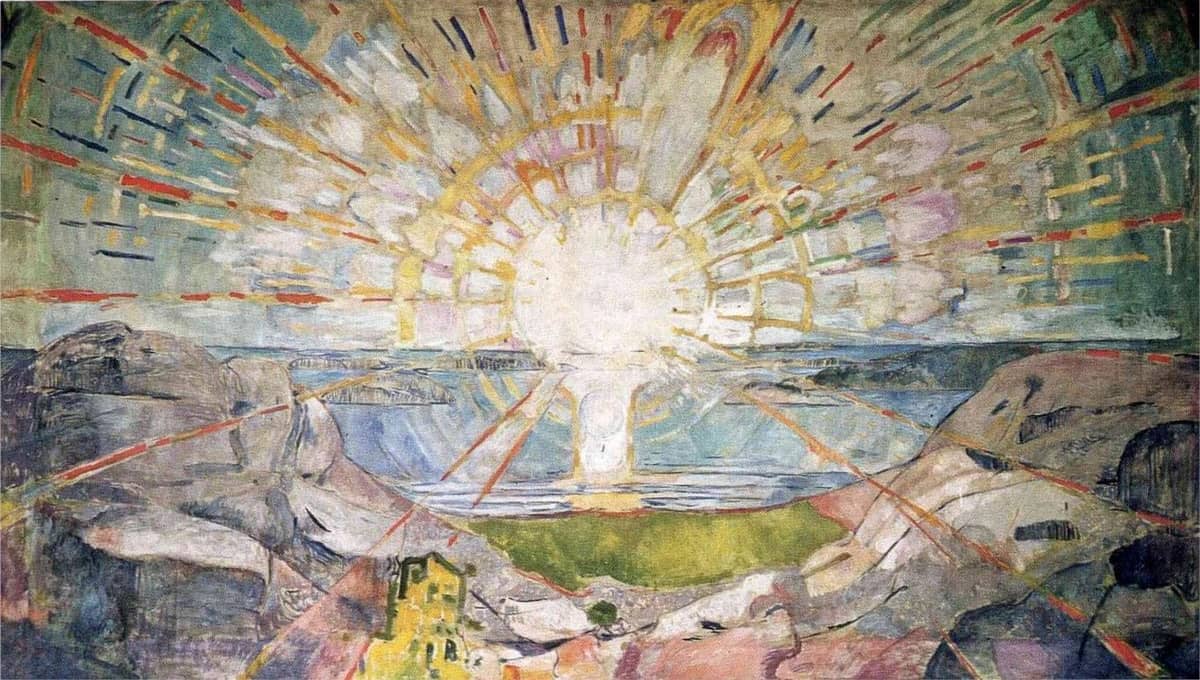
Art pieces to discuss: Kuwana: The Story of the Sailor Tokuzo by Utagawa Kuniyoshi, Concentric Bearings B by Vija Celmins, The Third-Class Carriage by Honoré Daumier, The Sun by Edvard Munch, and Chalk Cliffs on Rügen by Caspar David Friedrich.


3. Activity and Shareout:
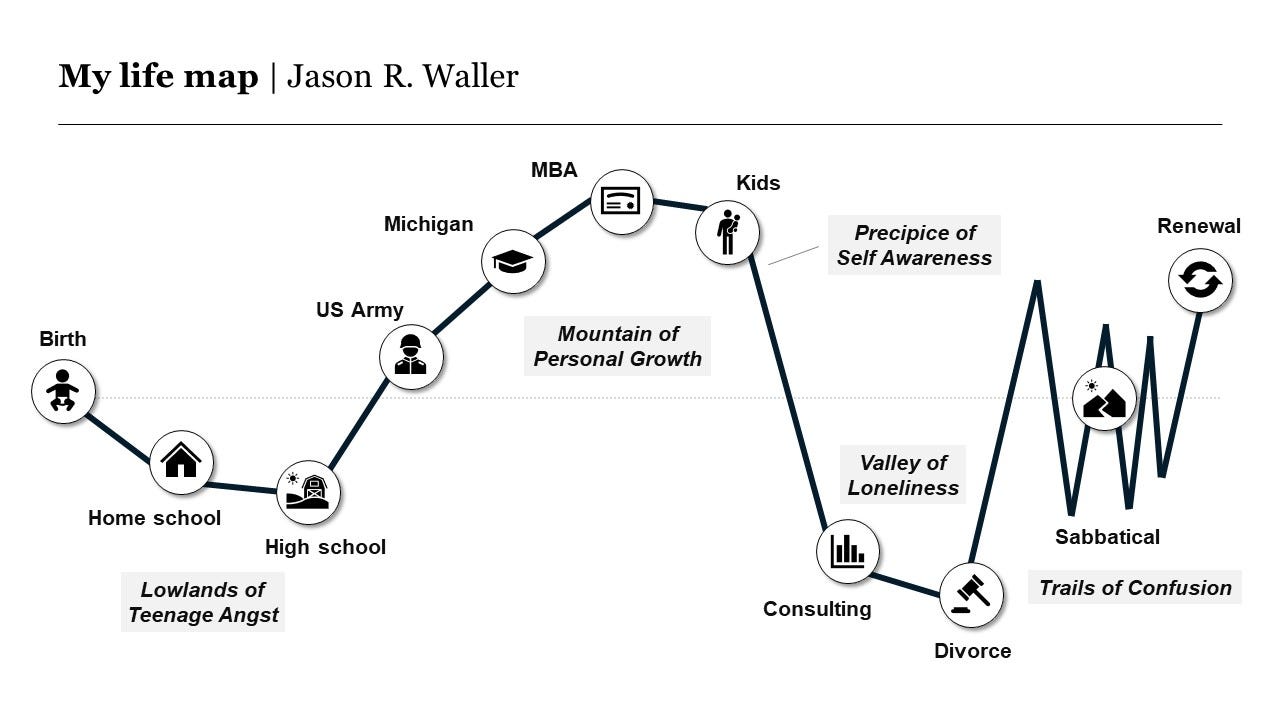
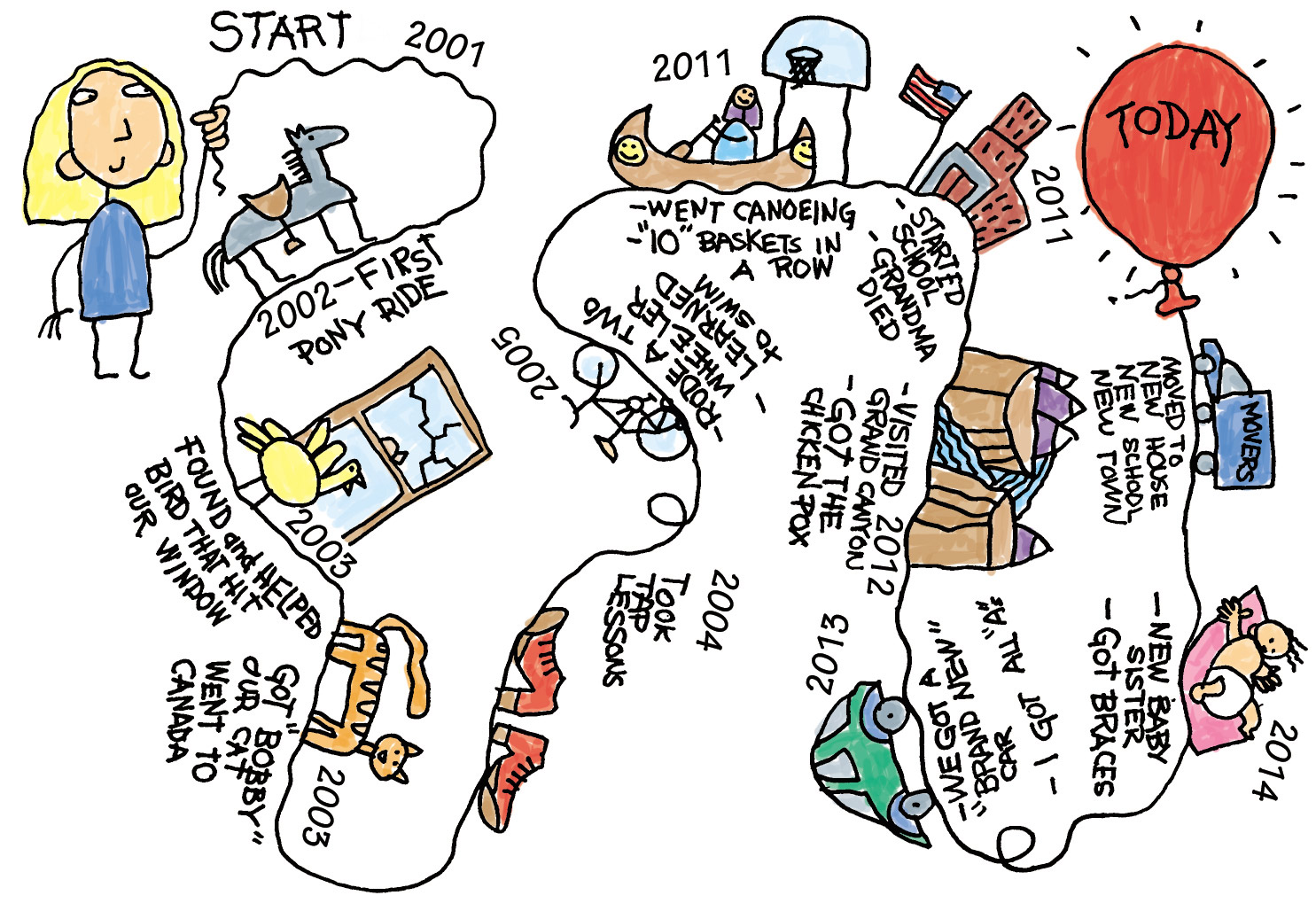
Participants are invited to think about their life path and all it encompasses. They may think about moments of achievement and moments of defeat; joy, as well as sorrow. It may help to consider various categories: family, career, hobbies, education, spirituality, etc. As they consider these topics, they are asked to create a visual: their personal “Map of Repair and Resiliency”. The contents of this map are entirely up to the individual, however, participants are encouraged to include both positive and negative experiences, to help explore the themes of this workshop session. This project may be visualized in a multitude of ways; for example, as walking paths or geographical maps; as linear stories with the highs and lows visualized, or as a cartoon, or even as something more abstract, such as a trail looping back on itself, or a web with many branches. Once the map is complete, participants are asked to reflect on the following questions:




Imagine your Map of Repair and Resiliency belonged to someone else. How would you feel about that person as you looked at their map? What values do you notice reflected in your Map of Repair and Resiliency? Does this Map of Repair and Resiliency help you feel a sense of compassion towards yourself? Why or why not?
Curriculum Example 5: Multitudes
This class session aims to engage participants in open-minded thinking, or, as Ted Lasso would say, “be curious, not judgmental". We may interpret the world around us in vastly different ways; this workshop asks participants to be aware of those different perspectives by discussing individual perspectives and being open to other ways of thinking.
1. Warm-up:
Using a worksheet from a 2023 Journal of Vision study, participants will identify and illustrate the colors and shapes they associate with the provided list of emotions. This activity should be done relatively quickly, based on instinct and gut reaction. At the end, there will be a brief share-out, helping the group visually recognize how differently we may interpret the same scenario and emotional response.
2. Discussion:
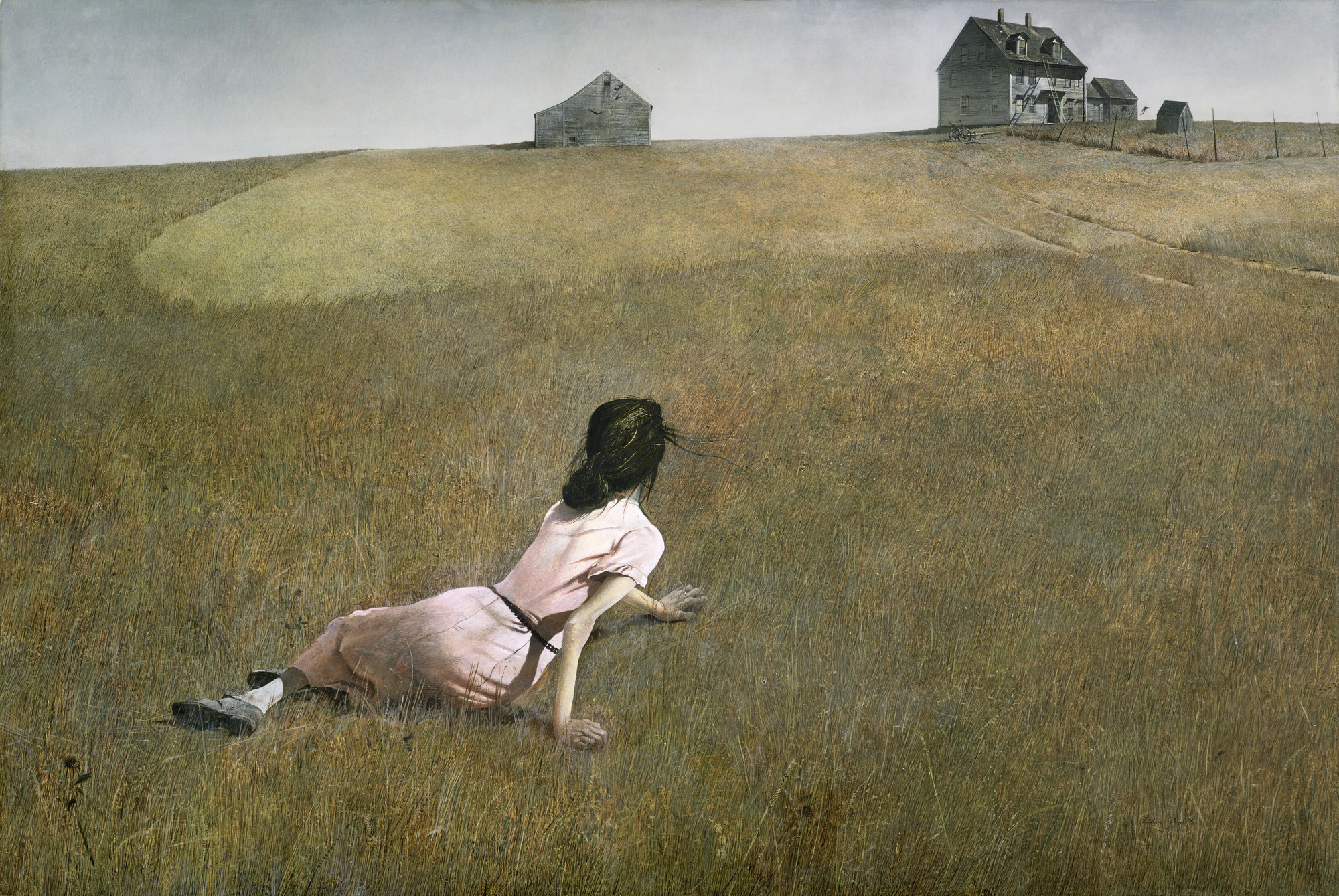
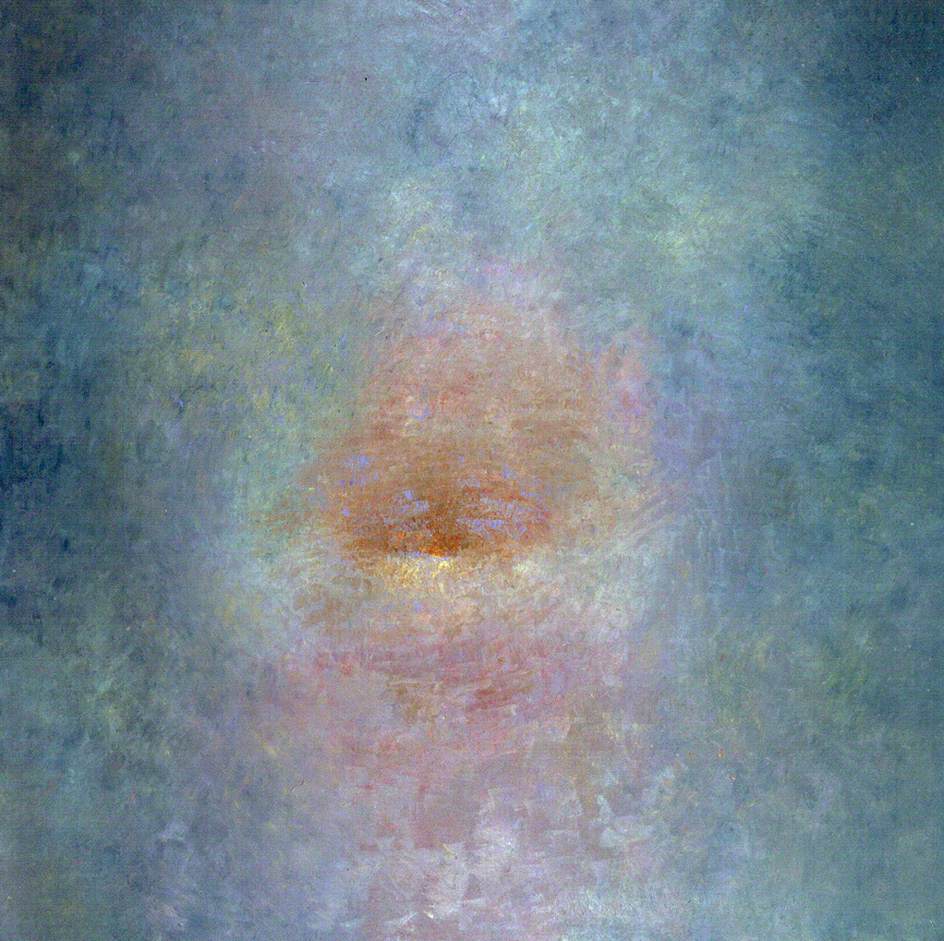
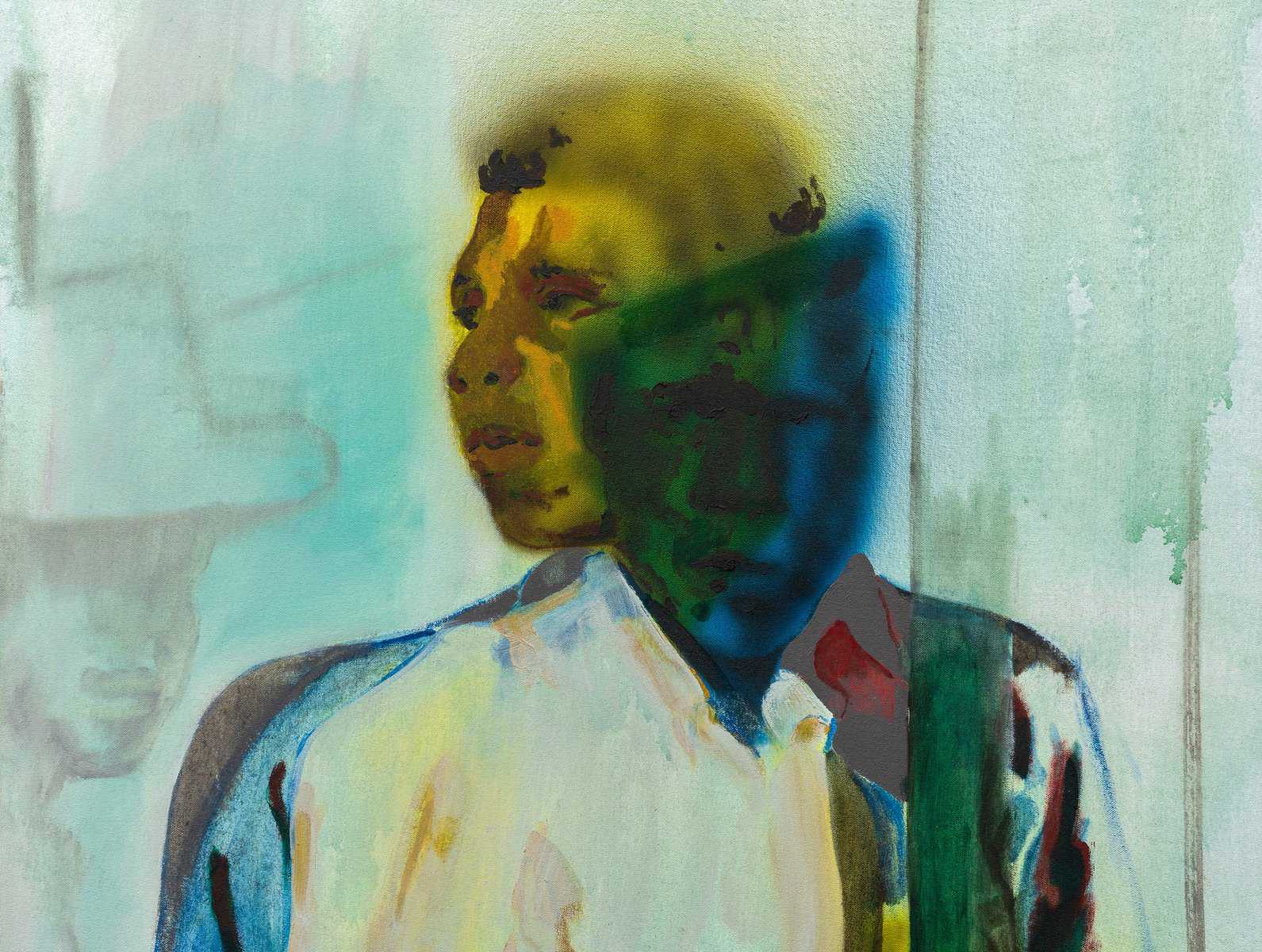
Art pieces to discuss: Christina's World by Andrew Wyeth, North Star by Corrine Slade, The Last Friend (or Artist's Death), by Zygmunt Andrychiewicz, Still Point by Gwen Hardie, The Holy Family by Henry Tanner, and What a Time by Taylor Simmons (with alternate views 1 and 2).




3. Activity and Shareout:
Using the examples of art from the workshop discussion, participants are asked to create a piece of visual artwork that explores the general theme of “multitudes”. There are a number of ways to approach this prompt, such as:
Use one of the pieces of artwork as specific inspiration, or recreate it while expressing a different emotion than you initially felt while looking at the piece
Think of a time you felt multiple emotions at once and try to visually express that combination of feelings
Choose a theme from this list:
• falling or floating
• being untethered
• in-between spaces
Workshop Implementation
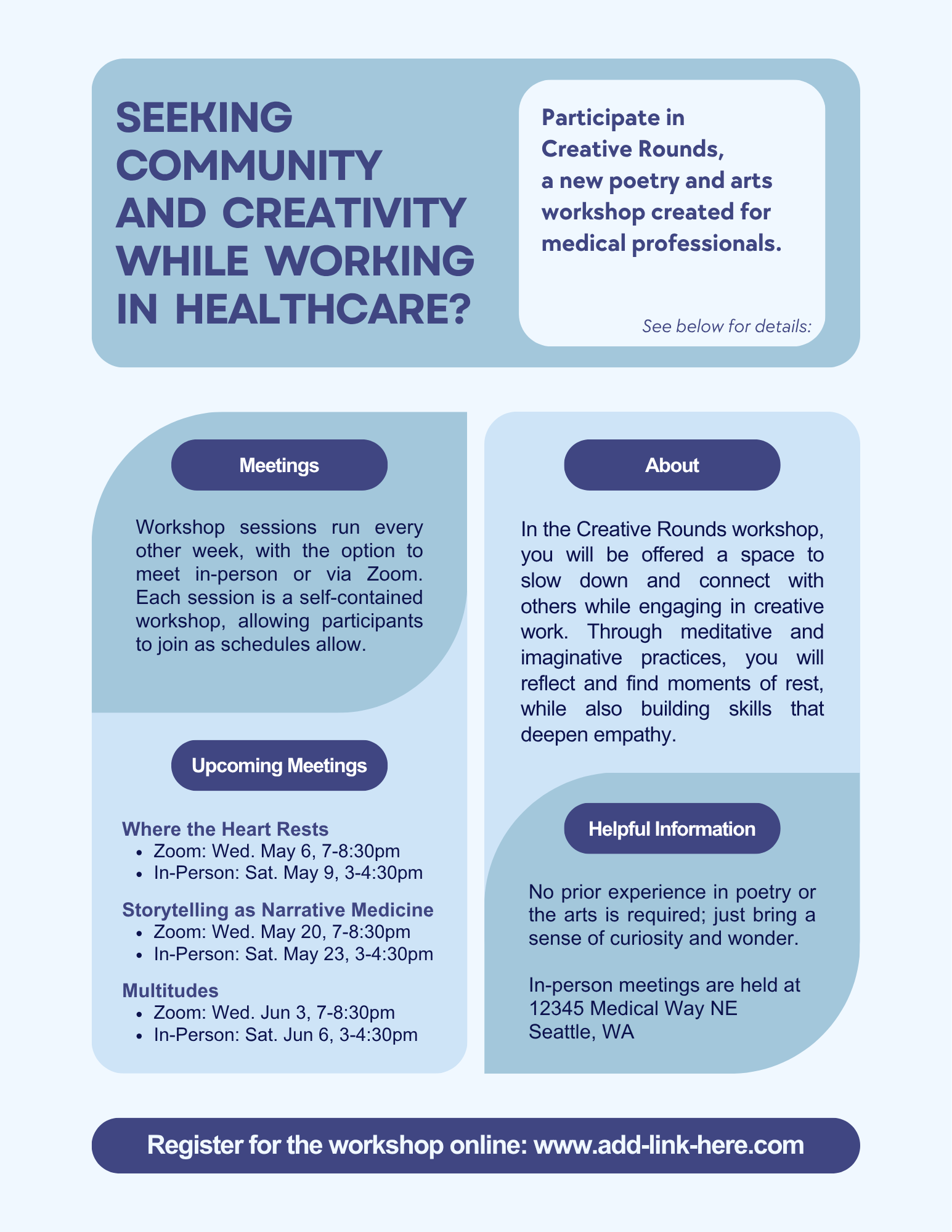
Creative Rounds is designed to operate within the greater Seattle area, offered either once per month or every other week depending on participant interest and availability. For each lesson plan, two sessions will be held, one in-person and one virtual, to provide flexible options for participation. Currently, I am available to facilitate sessions on weekday evenings or on weekends. Participants will be asked to register in advance so course materials may be shared prior to meeting. Sessions will ideally be capped at 20-25 attendees to maintain an engaging and interactive environment. Please see the attached flyer for an example of information that could be distributed to hospitals to gain interest in the program and encourage attendance.
During this initial implementation phase, the program will be offered specifically to healthcare professionals (ie physicians, nurses, medical students, researchers, etc), with the potential to expand to broader audiences over time. While workshops may be reused over time, I will maintain attendance records and remind returning participants that repeat sessions will cover the same material.
Meeting venues would ideally be equipped with a projector system. Public meeting rooms at local libraries are one option, and partnering with local hospitals is another, particularly if it allows the program to be hosted in locations that are convenient for participants. Depending on availability and need, the workshop location may vary from session to session.
Workshops will be provided free of charge to participants. I am able to supply materials as the program gets started. The visual arts workshops involve more logistics, so participants are welcome, but not required to bring their own supplies. For virtual sessions, participants will need to provide their own materials, which may make writing-based workshops more accessible in the remote format, since the supplies needed are fairly minimal. As this program is implemented, there may be grant funding available to assist with the cost of supplies.
Short- and Long-Term Program Goals
Short-term goals:
Provide quality writing tools and expand the visual arts component of the workshop by incorporating a wider range of art materials; this will require identifying and securing grant funding.
Increase access to virtual programming; with grant support, provide mailed supply kits to participants who register for virtual workshops (which offers the added benefit of supporting USPS).
Long-term goals:
Make Creative Rounds curriculum accessible to others interested in leading their own arts-based workshops, including opportunities for in-person training and travel-based instruction.
Broaden program participation to include not only medical staff, but also patients and their families.
Develop partnerships with universities that have medical programs to introduce arts education to medical professionals early in their training.
Collaborate with local museums such as the Seattle Art Museum to incorporate guided viewing of original artworks, including discussions led by docents or subject-matter experts.
Closing Notes
The intersection of medicine and the arts has interested me for quite some time, but I do have to admit that the highly popular HBO show The Pitt helped propel me to take action and finish planning a workshop related to the medical humanities. It’s exciting to see a growing desire to collectively express gratitude and care for healthcare workers, especially as the themes explored in The Pitt emerge in day-to-day conversations. I want to contribute to that momentum of care by helping create resources to support the healers who sustain us. At a time when institutions of science and medicine are too often met with unwarranted skepticism and mistrust, it is urgent and necessary to tend to community and engage in restorative truth-telling.
In the season one finale of The Pitt, we find Dr. Robinavitch and Dr. Abbot on the hospital rooftop. Trying to help ease the lingering pain of an unspeakably traumatic day, Abbot says, "We survived as a species because we learned how to cooperate and communicate…when we're in the middle of killing each other, it defies the very logic of our existence. Your brain starts to short-circuit. All you can do is focus on the medicine. The medicine's the only thing that saves the patient... and your sanity." This moment reminded me of bell hooks in her book All About Love: "Rarely, if ever, are any of us healed in isolation. Healing is an act of communion."
Community and human connection are the forces that sustain us, a concept that echoes throughout the Creative Rounds program. This workshop offers a space to slow down and connect with others while engaging in creative work. Through these meditative and imaginative practices, participants can reflect and find moments of rest, while also building skills that deepen empathy. No prior experience with poetry or visual arts is required; just a sense of curiosity and wonder for the world we live in. There is a deep well of compassion, healing, and wisdom to be found in the intersection of medicine and creativity. I look forward to meeting you there.